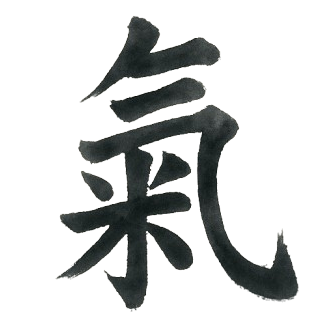
Qìgōng.
The foundational practice of internal cultivation — from the classical roots of the tradition through contemporary forms, taught in a sequence that builds genuine understanding from the inside out.
The art and science
of cultivating
life energy.
Qìgōng 氣功 is one of the oldest continuously practiced systems of human cultivation on earth.
Through the coordinated practice of movement, breath, and focused awareness — the Three Regulations (Sān Tiáo 三調) — the practitioner learns to sense, develop, and direct the internal energy that underlies all health, vitality, and internal development.
What Origin Institute teaches is not a modern approximation of that system. It is the living transmission of it — rooted in a lineage that traces to the original Shàolín monks, refined over centuries, and now available through a structured curriculum that builds genuine practitioners.
Most programs teach you a form.
We teach you the principles
that make any form meaningful.
Most Qìgōng programs begin with a form and teach you to copy it. Origin Institute begins with the classical principles that make any form meaningful.
A practitioner who understands these principles can approach any Qìgōng form — classical or contemporary — with genuine understanding. They can evaluate what they are practicing, adapt it intelligently, and eventually design programs for themselves or the groups they lead.
That is the level of understanding Origin Institute's curriculum is designed to produce.
A progressive pathway
of 段 Duàns.
Each stage builds on the foundation established by the one before. Three Duàns make up the Qìgōng curriculum at Origin Institute — from the foundational practices through the deep classical canon.
Qìgōng Fundamentals
The entry point for all students. A rigorous 40-day program integrating theory and practice to establish a genuine foundation in internal cultivation.
Tàijí Qìgōng & Bāduànjǐn
The entry into the classical forms. Two of the most refined classical Qìgōng sets ever developed — the Eighteen Forms and the Eight Brocades.
Five Animal Frolics & Yìjīnjīng
The deep classical canon. Two of the most significant classical Qìgōng sets in the entire tradition — Wǔ Qín Xì and the Tendon and Sinew Changing Classic.
Qìgōng Fundamentals.
A rigorous 40-day program integrating theory and practice to establish a genuine foundation in internal cultivation.
The curriculum begins with Dé 德 — virtue and ethics — before the first movement is taught. This is not a formality. It is the foundational sequence of authentic transmission. Without Dé, practice has no root.
Dé — Virtue
The foundational sequence of authentic transmission. Without Dé, practice has no root. Every student who begins the path begins here, before the first movement is taught.
Gōngfu — Skill Through Time
The classical understanding of skill developed through time and devoted effort. The discipline that makes all practice possible.
Warm-ups & Dǎoyǐn Stretching
A cephalocaudal warm-up sequence and six traditional stretching practices that open the body, release tension, and prepare the meridians for deeper practice.
Sōng Gōng — The Five Releases
Foundational relaxation practices that develop the capacity for deep internal release without collapse. The first internal skill every serious practitioner must develop.
Wújí Shì — Standing in Emptiness
Standing in emptiness. The cultivation of stillness as the root of all movement.
Shuǎishǒu Gōng — Swing Hand Practice
A dynamic circulation practice that develops peripheral circulation, nourishes the internal organs, and promotes vitality through rhythmic movement.
The Forty-Nine Breaths
A foundational breathing practice developing blood oxygenation and lung capacity through coordinated breath and movement.
Tiáo Qì Gōng — Regulating Qì
Regulate Qì practice. Balancing Yīn and Yáng, activating Qì awareness, and stimulating the Rèn Mài and Dū Mài meridians.
Zhàn Zhuāng — Standing Meditation
Standing meditation. Dynamic stillness — the practice of rooting, internal power development, and Qì cultivation through sustained standing postures.
Principles of Qìgōng Practice I & II
The foundational and advanced principles governing all authentic Qìgōng practice — relaxation (Fàngsōng 放鬆), posture, breathing techniques, mindfulness (Yìniàn 意念), and the full integration of the Three Regulations.
Origins of Qìgōng
The historical development of Qìgōng across Chinese dynasties, its roots in shamanic, Dàoist, Buddhist, and medical traditions, and its modern revival.
Basic Philosophical Principles
Dàoist foundations including Wújí 無極, Yīn 陰 and Yáng 陽, Tàijí 太極, and the cosmological sequence from Wújí to the Ten Thousand Things (Wànwù 萬物).
Integration & Review
A complete daily practice sequence incorporating all foundational practices, with a follow-along video for daily use.
Fundamentals Assessment & Next Steps
Practical self-assessment and guidance for transitioning to the 2nd Duàn.
Students who complete the 1st Duàn carry a foundational understanding of Qìgōng that will inform every practice they encounter for the rest of their lives.
Tàijí Qìgōng & Bāduànjǐn.
The entry into the classical forms of the tradition. Students who have completed the 1st Duàn now bring their foundational understanding to two of the most refined classical Qìgōng sets ever developed.
Tàijí Qìgōng — 18 Forms
Compiled by Professor Lín Hòushěng 林厚省 in 1979, drawing from traditional Tàijíquán, classical Qìgōng, and TCM principles. Eighteen movements practiced with full understanding of the internal mechanics behind each one.
The number eighteen was chosen symbolically, representing harmony and balance. Students learn each movement in sequence — its origins, principles, health benefits, and internal mechanics — building a practice that is both accessible and profound.
Bāduànjǐn — Eight Brocades
One of the most widely practiced and historically significant classical Qìgōng sets. Eight movements, each targeting specific organ systems and meridian pathways, refined across centuries of clinical and contemplative practice.
Students progress through three stages — learning the postures, refining the requirements, and developing the inner work of coordinating breath and Qì with each movement.
Five Animal Frolics & Yìjīnjīng.
The deep classical canon. This Duàn introduces two of the most significant classical Qìgōng sets in the entire tradition.
Wǔ Qín Xì — Five Animal Frolics
Attributed to the physician Huà Tuó 華佗 nearly two thousand years ago, this is one of the oldest Qìgōng classics in existence. Five movement sequences drawing from the tiger, deer, bear, monkey, and crane — each cultivating specific internal qualities, organ systems, and energetic pathways.
These are not imitations of animals. They are precise internal practices encoded in an ancient and elegant form that has sustained human health and vitality across generations.
Yìjīnjīng — Tendon & Sinew Changing Classic
A foundational Shàolín Qìgōng set designed to transform the physical body at a deep structural level — strengthening the sinews, opening the meridians, and building the internal foundation for the most advanced stages of practice.
A practitioner who has genuinely worked through the Yìjīnjīng understands what internal development actually means from the inside.
Through sustained practice,
five real capacities take root.
This is not a short path. It is a real one — and what it produces is durable.
Vitality & Health
Physical vitality and health developed through sustained internal cultivation.
Theoretical Foundation
Genuine understanding of Qì theory and the meridian principles that underlie the work.
Three Regulations
The capacity to regulate breath, movement, and mind as a single unified practice.
Classical Foundation
A foundation from which any contemporary form can be understood and evaluated with authority.
Transmission
The internal authority to design personal practice — and eventually to lead others.
Origin Institute's Qìgōng curriculum releases on a structured drip schedule.
Lessons unlock progressively to ensure students build genuine understanding at each stage before advancing. This is not a content library to browse. It is a transmission to receive.
The pacing is intentional and mirrors the way this practice has always been taught — with patience, sequence, and the understanding that depth cannot be rushed.
Begin with the foundation.
Build from the root.
The 1st Duàn is available now inside Origin Temple. A free trial is open to those ready to begin.